
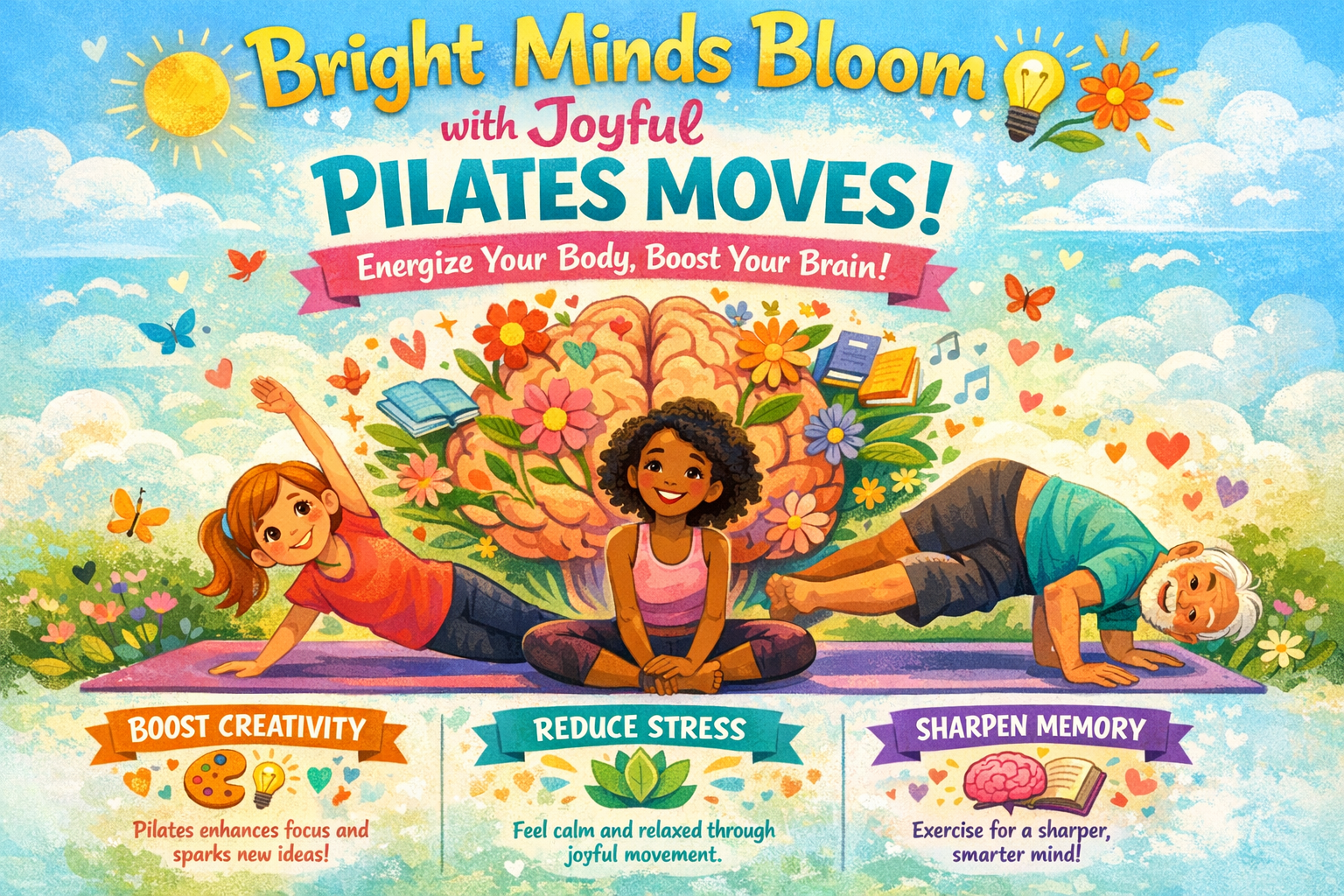
Welcome to a bright, bouncy world where movement feels like sunshine and calm arrives on tiptoe. Pilates & Autism: Joyful Moves for Bright Minds celebrates gentle strength, playful focus, sensory-friendly routines, and the magic of meeting every mover exactly where they are. Pilates is not a “fix” for autism—because autistic minds are already wonderfully whole. Instead, it can be a joyful toolkit: a way to explore body awareness, breathing, balance, confidence, and comfort through kind, creative motion.
Bouncing Into Calm: Pilates Sparks Bright Minds
Pilates begins with a simple invitation: notice your body. For autistic children, teens, or adults, that invitation can become a friendly bridge between busy thoughts and grounded feelings. A soft mat, a steady rhythm, and a calm voice can turn movement into a safe little island.
Breathing is the first sparkle in the Pilates toolbox. Imagine smelling a flower, then slowly blowing a feather across the room. This playful breathwork can help the nervous system settle, giving bright minds a gentle path toward calm without pressure or perfection.
Pilates movements are often slow, clear, and repeatable, which can feel reassuring. Predictable patterns—roll down, reach out, curl up, rest—can create a comforting rhythm. Like a favorite song, the sequence becomes familiar, and familiarity can feel like a warm blanket.
For movers who love structure, Pilates can be organized into visual steps: first breathe, then stretch, then balance, then relax. For movers who enjoy imagination, exercises can become stories: a cat stretching in sunlight, a starfish reaching wide, a turtle curling into its shell.
Calm does not always look still. Sometimes calm is a controlled bounce on a therapy ball, a focused push through the palms, or a strong squeeze of the legs around a cushion. Pilates honors this by offering both quiet and active ways to find balance.
Most importantly, Pilates can celebrate each person’s unique pace. One day may be full of energy and giggles; another may need soft lights and only two movements. Every version counts. Every breath counts. Every small success is a bright little firework.
Wiggles to Wonders: Autism-Friendly Core Play
The “core” in Pilates is more than tummy muscles—it is the body’s center of support. A strong, aware core can help with posture, balance, coordination, and confidence. For autistic movers, core play can become a cheerful way to feel more at home inside the body.
Autism-friendly Pilates often begins with choices. Would you like to be a sleepy starfish or a strong bridge? Would you like the blue mat or the green mat? Choice gives the mover a sense of control, and control can make movement feel safer and more fun.
Core exercises can be turned into games. A gentle “bridge” can become raising a drawbridge for tiny boats. A seated twist can become looking for moon rocks on each side. A plank can become a superhero hover—short, strong, and celebrated.
Wiggles are welcome here. Instead of saying, “Stop moving,” an instructor might say, “Let’s give those wiggles a job.” Wiggles can become marching legs, tapping toes, rolling like a log, or pressing hands into the mat for grounding input.
For children who seek deep pressure, Pilates can include cozy compression moments: squeezing a soft ball between the knees, pressing palms together, or curling into a compact shape. These movements may support body awareness and create a satisfying “I know where I am” feeling.
Core play works best when it is joyful rather than demanding. A five-second hold can be a triumph. One careful roll-up can be a parade. Pilates becomes less about perfect form and more about connection, curiosity, and the wonderful discovery: my body can do amazing things.
Stretch, Smile, Shine: Sensory Pilates Magic
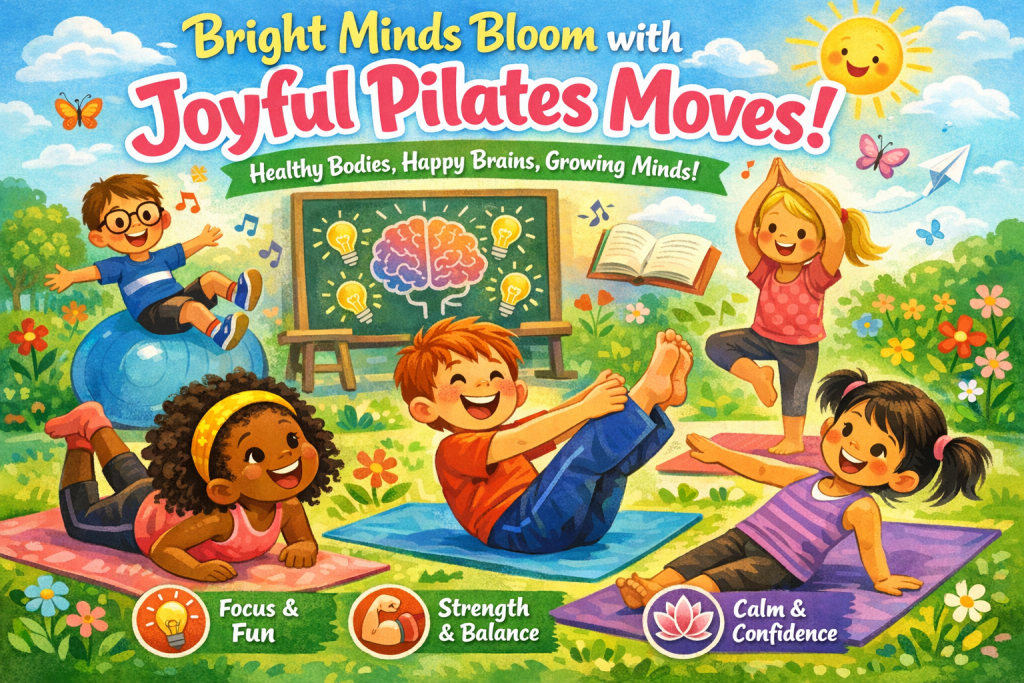
Sensory-friendly Pilates is like painting with movement. Some movers need quiet colors: slow stretches, dim lights, soft voices, and gentle music. Others enjoy brighter colors: firm pressure, rhythmic counting, energetic poses, or textured props.
Stretching can help the body feel open and organized. A long reach overhead might feel like growing into a tree. A side bend might feel like becoming a rainbow. A hamstring stretch with a strap can feel steady and supported, especially when the mover controls how far to go.
Props can add sensory magic. A squishy ball can provide feedback. A stretchy band can create satisfying resistance. A weighted blanket during rest can feel grounding for some people. The key is always consent, comfort, and careful observation.
Pilates also encourages proprioception—the sense of where the body is in space. Pressing feet into the floor, pushing hands into the mat, or moving slowly against resistance can give the brain useful body-maps. These maps may support coordination and confidence.
Some autistic movers may be sensitive to touch, sound, smell, or unexpected changes. A sensory-wise Pilates session can include clear explanations, visual schedules, no surprise adjustments, and permission to pause. Respect is the secret ingredient that makes movement sparkle.
A smile in Pilates does not have to be loud or obvious. It may look like relaxed shoulders, a deeper breath, a willingness to try again, or staying in the room one minute longer. Shine comes in many forms, and every form is beautiful.
Little Reformer Rainbows for Big Feelings
The Pilates reformer, with its sliding carriage, springs, straps, and footbar, can look like a curious little spaceship. For autistic movers, it may be exciting, calming, or overwhelming at first. A gentle introduction helps turn uncertainty into wonder.
Reformer work can offer smooth, predictable movement. The carriage glides forward and back like a train on tracks, and the springs provide steady resistance. This can be deeply satisfying for movers who enjoy rhythm, pressure, and clear cause-and-effect.
Big feelings sometimes need big-but-safe movement. Pushing the carriage away with the feet can feel powerful. Pulling straps can feel organizing. Slow gliding can feel soothing. The reformer can become a rainbow road where emotions move through the body instead of getting stuck.
Safety and trust come first. An instructor should explain each part of the equipment, demonstrate the movement, and use simple cues. Visual supports, countdowns, and consistent routines can help the mover know what is coming next.
Not every autistic person will enjoy the reformer, and that is perfectly okay. Mat Pilates, chair Pilates, wall exercises, or ball-based movement can offer similar benefits in a simpler setting. The best Pilates is the Pilates that feels respectful and welcoming.
When reformer Pilates does fit, it can feel like flying with seatbelts. There is motion, support, strength, and play all at once. Little reformer rainbows can help big feelings soften, stretch, and find a brighter shape.
Pilates for autistic movers is a celebration, not a correction. It is a cheerful garden of breath, balance, strength, sensory support, and choice. Whether on a mat, a ball, a chair, or a reformer, every joyful move can become a message: you are safe, you are capable, you belong in your body, and your bright mind deserves to shine.
Discover more from Pilates All Ages
Subscribe to get the latest posts sent to your email.