
Welcome to Pilates Joy, a bright little world where movement becomes music, mats become islands, and every stretch is a chance for autistic kids and their parents to connect. Here, there is no “perfect pose”—only playful progress, shared laughter, and gentle moments that help bodies feel safe, strong, and wonderfully alive.
Pilates Joy: Stretching Smiles Together Brightly
Pilates can feel like a sunny invitation: Come as you are, wiggle as you wish, and breathe at your own pace. For autistic children, this welcoming approach matters. A calm, predictable movement routine can create comfort while still leaving room for imagination and fun.
Picture a child reaching their arms up like a tall tree, then folding down like a sleepy flower. These simple stretches can help build body awareness, flexibility, and confidence. Each movement becomes a tiny adventure, not a test.
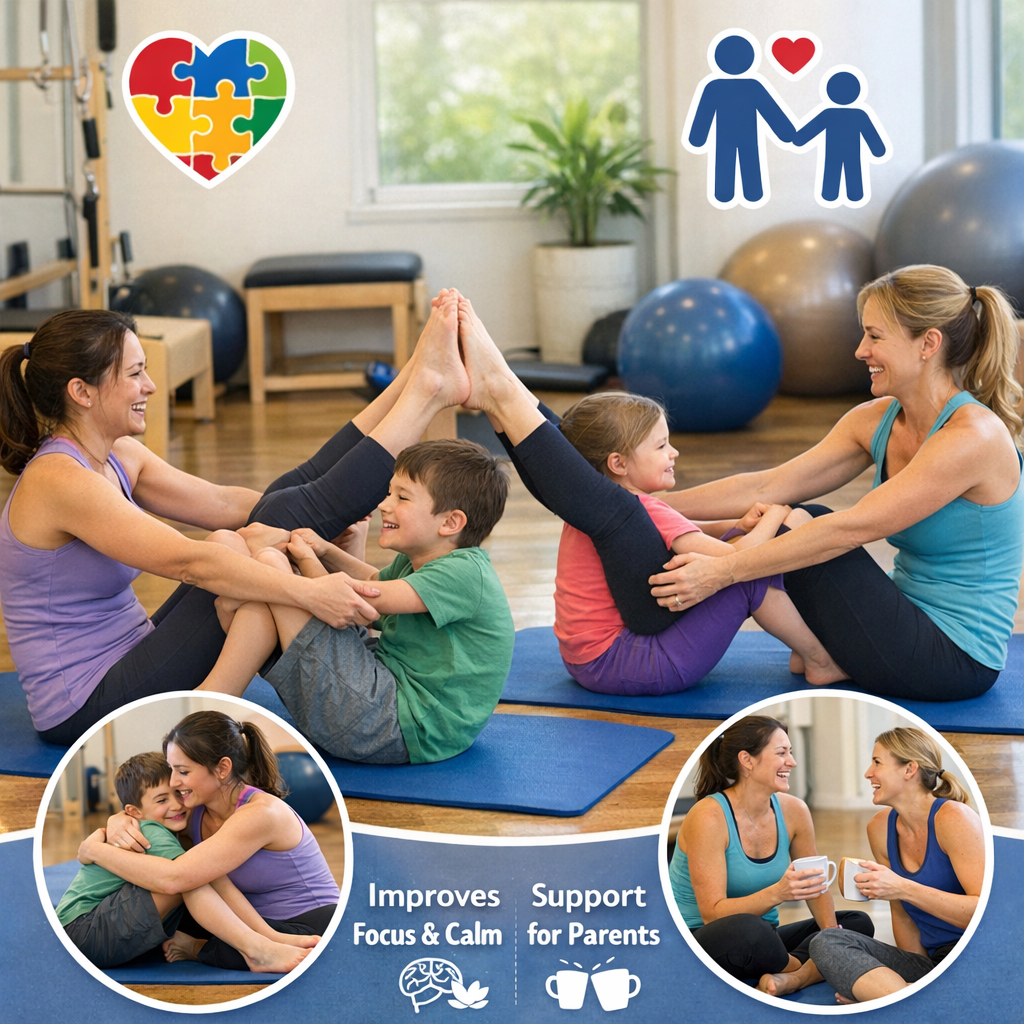
Parents join in as partners, not coaches with clipboards. They stretch beside their child, making eye contact when it feels right, offering encouragement, and celebrating every effort. A shared mat can become a cozy bridge between parent and child.
The joy of Pilates is often found in small details: toes pressing into the floor, shoulders relaxing, hands opening like starfish. For children who may experience sensory overwhelm, these mindful motions can help them notice their bodies in a gentle, friendly way.
A cheerful Pilates session might include animal poses, soft music, colorful mats, or a favorite plush toy watching from the corner. Familiar objects and routines can help autistic kids feel secure, turning movement time into something they can look forward to.
Most importantly, Pilates Joy is not about fixing anyone. It is about supporting children and families with kindness. It says, “Your body belongs here. Your pace is perfect. Your smile counts.”
Tiny Core Wins for Autistic Kids and Parents
Core strength sounds like a big grown-up phrase, but in Pilates Joy, it can be as simple as sitting tall like a proud penguin. A strong core helps children with posture, balance, coordination, and everyday movements like climbing stairs, sitting at a desk, or carrying a backpack.
For autistic kids, building strength through slow and clear exercises can be especially helpful. Predictable movements offer structure, while repetition can make the body feel more organized. Over time, these tiny core wins may lead to bigger confidence in daily life.
Parents may notice sweet little victories: a child holding a pose for two extra seconds, trying a new movement, or saying, “Again!” after a favorite exercise. These moments deserve applause, high-fives, or even a family victory dance.
Pilates also gives parents a chance to slow down and connect. Instead of rushing through homework, meals, appointments, and routines, they can pause on the mat together. This shared pause can feel like a pocket of sunshine in a busy day.
Some kids may prefer visual instructions, while others may respond better to demonstrations, rhythm, or storytelling. A movement like “curl like a caterpillar” may feel more inviting than “activate your abdominals.” Creative language can turn exercise into play.
Every tiny core win matters because it belongs to the child. Whether the movement is big, small, wobbly, or wonderfully unexpected, it is still progress. Pilates Joy celebrates effort as brightly as achievement.

Breathing, Balance, and Big Family Giggles
Breathing is one of the quiet superpowers of Pilates. Slow breaths can help calm the nervous system, support focus, and create a rhythm for movement. For autistic children, breathing exercises may be more successful when they are playful and visual.
A child might imagine blowing bubbles, cooling soup, or sending a feather floating across the room. These gentle breathing games can make self-regulation feel less like a lesson and more like magic. Parents can join in, making silly sounds or counting softly.
Balance exercises can bring big giggles, especially when everyone wobbles together. Standing on one foot like a flamingo or walking heel-to-toe across an imaginary moonbeam can turn coordination practice into family comedy. Wobbles are not mistakes—they are part of the show.
When families laugh together, movement becomes emotionally safe. A parent who topples gently onto a cushion can show that it is okay to try, wobble, and try again. This lightness can reduce pressure and help children feel brave.
Pilates Joy can also support transitions. A short breathing-and-stretching routine before school, bedtime, or a noisy outing may help prepare the body and mind. Consistency can make these routines feel like friendly signposts throughout the day.
In the end, the heart of Pilates Joy is togetherness. It is the sound of shared breathing, the sight of tiny determined feet, and the sparkle of a parent’s proud smile. It is balance, laughter, and love stretching side by side.
Pilates Joy helps autistic kids and parents discover movement as a cheerful language of connection. With gentle stretches, playful breathing, tiny strength-building wins, and lots of family giggles, every session becomes a celebration of comfort, courage, and bright togetherness.
Discover more from Pilates All Ages
Subscribe to get the latest posts sent to your email.